Places
Muzaffargarh
About this place
Muzaffargarh is an important city and district of southern Punjab, Pakistan, situated in the heart of the Saraiki-speaking region. Known for its fertile plains, rivers, agriculture, historic settlements and distinctive Saraiki culture, the district occupies a unique position between the Indus and Chenab rivers.
GEOGRAPHY & LOCATION
Muzaffargarh lies between the Chenab River to the east and the Indus River to the west. This position gives the district a distinctive landscape of fertile riverine plains, agricultural land, canals and settlements shaped by the two major rivers.
The district covers approximately 8,249 square kilometres according to the official district history. It borders Layyah to the north, Bahawalpur and Rahim Yar Khan across the Chenab to the south, Multan and Khanewal to the east, Jhang to the northeast, and Dera Ghazi Khan and Rajanpur across the Indus to the west.
The city itself is located on a flat alluvial plain, with agricultural land and canal networks surrounding the urban area.
HISTORY & FOUNDATION
The modern town of Muzaffargarh was founded in 1794 by Nawab Muzaffar Khan, the Governor of Multan. The name Muzaffargarh means "Fort of Muzaffar", referring to the fortified settlement established by Nawab Muzaffar Khan.
Before the foundation of the town, the location was associated with a small settlement known as Musan Hatti on the road between Multan and Dera Ghazi Khan.
Muzaffargarh became a separate district in 1861 and subsequently developed as an administrative and agricultural centre of southern Punjab.
The district's history reflects the wider political history of Multan, southern Punjab and the Derajat region, including periods of Afghan, Sikh and British administration before the creation of Pakistan.
THE RIVERS
The Indus and Chenab are among the defining geographical features of Muzaffargarh.
The rivers have shaped the district's agriculture, settlements, transportation and local economy for generations. Riverine areas provide fertile land, while seasonal flooding has also been an important part of the region's environmental history.
The district was particularly affected by the devastating floods of 2010 because of its location between two major rivers.
CANALS & AGRICULTURE
Agriculture is central to life in Muzaffargarh. The district's fertile alluvial soils and irrigation network support a wide variety of crops.
Major crops include wheat, cotton and sugarcane, while rice, sunflower, pulses, maize and other crops are also cultivated.
The region is also known for its fruit production. Mangoes, dates and pomegranates are among the important fruits grown locally, while citrus, guava, falsa, jamun and bananas are also cultivated.
According to the district's agriculture profile, Muzaffargarh has also developed a significant fish-farming sector, with thousands of acres used for aquaculture.
MANGOES & FRUIT CULTURE
Mango cultivation is an important part of Muzaffargarh's agricultural identity. The warm climate and irrigated farmland provide suitable conditions for mango orchards.
Fruit orchards form part of the rural landscape and contribute to the local economy alongside field crops and livestock.
SARAiki LANGUAGE & IDENTITY
Muzaffargarh is deeply connected with Saraiki language and culture.
The 2023 Pakistan Census recorded 4,479,408 people in Muzaffargarh District reporting Saraiki as their mother tongue, out of a total population of approximately 5.01 million. This makes Saraiki the overwhelmingly predominant mother tongue recorded in the district.
The language is heard throughout everyday life, including homes, markets, villages, poetry, folk music, storytelling and local cultural gatherings.
Muzaffargarh therefore forms an important part of the wider Saraiki cultural landscape stretching across southern Punjab and adjoining areas.
MUZAFFARGARH CITY
Muzaffargarh city serves as the district's administrative and commercial centre.
Its urban landscape combines government offices, markets, educational institutions, healthcare facilities, businesses and residential neighbourhoods with the surrounding agricultural countryside.
The city has grown around its historical administrative role while remaining closely connected to the villages and agricultural communities of the district.
ALI PUR
Alipur is one of the major tehsils of Muzaffargarh District.
Located toward the southern part of the district, Alipur has strong agricultural and riverine connections. Its location near the Chenab and Indus system contributes to the area's fertile agricultural landscape.
JATOI
Jatoi is another important tehsil of Muzaffargarh.
The area is known for agriculture, villages, local markets and its connection with the wider riverine landscape of southern Punjab.
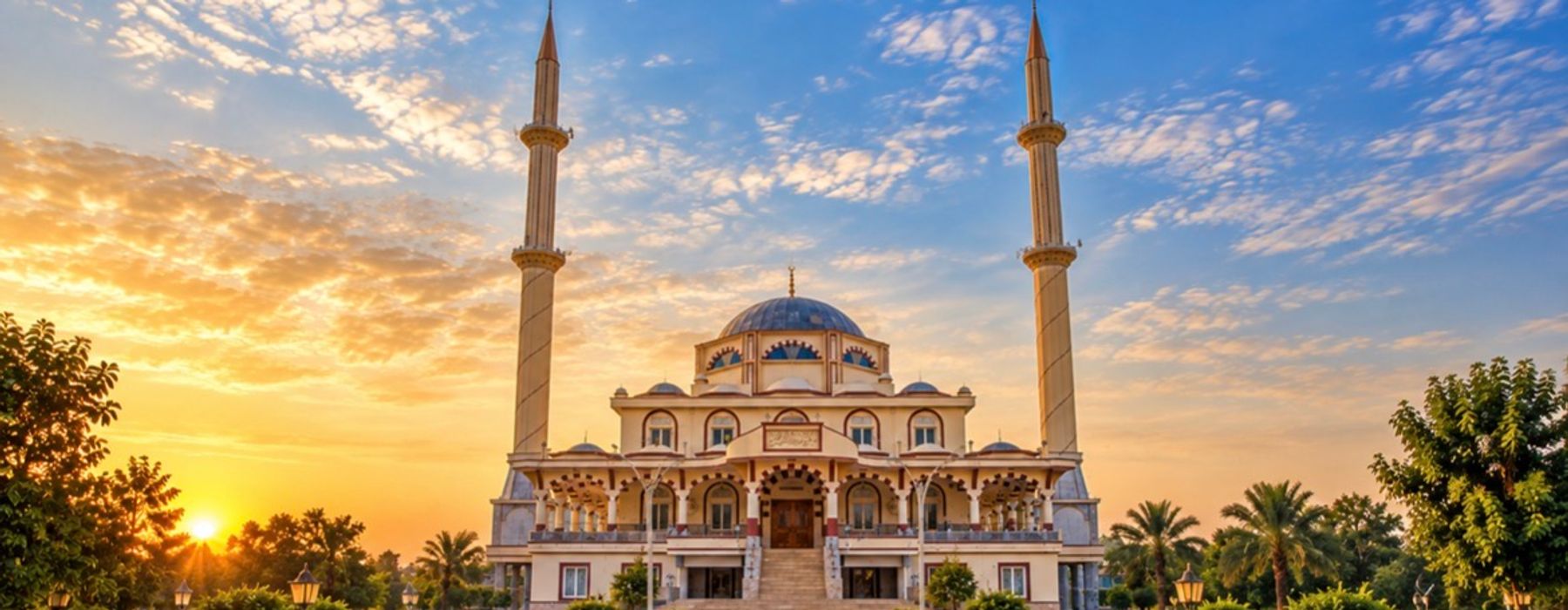
Sakina-Tu-Sughra Mosque is located in Kotla Reham Ali Shah in Jatoi Tehsil and is one of the notable religious landmarks highlighted by the district administration.
KOT ADDU
Kot Addu has historically been an important settlement in the wider Muzaffargarh region and is associated with agriculture, commerce and transportation.
The area also occupies an important position within the broader Indus-Chenab landscape of southern Punjab.
SAKINA-TU-SUGHRA MOSQUE
One of Muzaffargarh's notable religious landmarks is Sakina-Tu-Sughra Mosque in Kotla Reham Ali Shah, Jatoi.
The mosque is known for its distinctive architectural appearance and was constructed with the involvement of specialists from Turkey. The district administration identifies Dr. Ismail Bukhari as its founder.
The mosque has become one of the recognizable landmarks associated with the district.
RELIGIOUS & SPIRITUAL HERITAGE
Like many parts of southern Punjab, Muzaffargarh has a rich religious landscape consisting of mosques, shrines, village sacred spaces and historic places of worship.
Religious traditions are closely connected with community life, annual gatherings and local customs.
SARAiki SUFI TRADITION
Muzaffargarh exists within the wider cultural world shaped by Saraiki Sufi poetry and devotional traditions.
The poetry of figures such as Khwaja Ghulam Farid and other regional poets has influenced the cultural imagination of southern Punjab, while local singers and poets continue to preserve themes of spirituality, love, separation, nature and the Rohi landscape.
FOLK MUSIC
Music remains an important part of cultural life.
Saraiki folk songs, kafis, dohras and other traditional forms are performed at weddings, family gatherings, cultural events and local celebrations.
The musical traditions of the district are connected with the wider folk heritage of Multan, Dera Ghazi Khan, Layyah, Bahawalpur and the surrounding Saraiki belt.
FOLK STORIES & ORAL TRADITION
Stories, legends, poetry and oral histories have traditionally been passed between generations.
Village elders, poets, singers and performers have played an important role in preserving local memories, customs and cultural values.
TRADITIONAL DRESS
Traditional clothing in Muzaffargarh reflects the wider dress culture of southern Punjab.
Men commonly wear shalwar kameez, while traditional turbans and regional styles remain visible in rural communities and cultural gatherings.
Women wear colourful shalwar kameez and regional embroidery, with patterns and textiles varying according to local traditions and family customs.
HANDICRAFTS
Traditional crafts form part of the cultural economy of the district.
Embroidery, woven textiles, decorative work, pottery and other forms of handmade craftsmanship are connected with rural life and the broader craft traditions of southern Punjab.
FOOD
Muzaffargarh's cuisine reflects the agricultural abundance of the region.
Traditional meals commonly include wheat-based breads, rice dishes, vegetables, pulses, meat preparations and dairy products.
Fresh mangoes, dates and other locally grown fruits are also an important part of the region's food culture.
LIVESTOCK
Livestock is an important part of the rural economy.
Cattle, buffaloes, goats, sheep and poultry are raised by farming communities, providing milk, meat and additional household income.
The combination of agriculture and livestock supports the livelihoods of many rural families.
INDUSTRY
Although agriculture remains central to Muzaffargarh's economy, the district also has a range of industrial activities.
The official district profile lists sugar mills, textile mills, cotton-ginning units, rice mills, flour mills, oil mills, food factories, cold storage facilities and other industries.
These industries are closely connected with the agricultural production of the surrounding region.
CLIMATE
Muzaffargarh has an arid climate characterized by very hot summers and comparatively mild winters.
The district administration describes the area as having an extreme hot-weather environment, with dust storms occurring during parts of the year.
The climate, together with irrigation, has helped shape the agricultural character of the region.
RIVERINE LANDSCAPES
The areas along the Indus and Chenab contain distinctive riverine environments.
These landscapes include farmland, river channels, vegetation, villages and seasonal wetlands.
The rivers remain important to agriculture and the ecological character of southern Punjab.
FLOODS & ENVIRONMENT
Muzaffargarh's location between two major rivers means that flood management is an important part of its environmental history.
The district experienced severe impacts during the 2010 floods, demonstrating both the agricultural importance and environmental vulnerability of its riverine geography.
THAL DESERT CONNECTION
The northern and western parts of the wider Muzaffargarh region connect culturally and geographically with the Thal landscape.
The Thal Desert is associated with sandy terrain, traditional pastoral life, camel culture and distinctive desert traditions.
The district has also hosted the Thal Desert Jeep Rally, an event highlighted by the district administration and tourism authorities.
EDUCATION
Education has expanded across the district through government schools, private schools, colleges and higher-education institutions.
Schools and colleges serve both urban communities and villages, while professional and higher education connect local students with institutions across southern Punjab.
HEALTHCARE
Muzaffargarh has a network of district and tehsil hospitals, rural health centres and basic health units serving its population.
Healthcare services are distributed between Muzaffargarh city and the district's major tehsils and rural areas.
TRANSPORT & CONNECTIVITY
Muzaffargarh is connected with other major cities of southern Punjab through road networks.
Its location between Multan, Dera Ghazi Khan, Layyah, Bahawalpur and other regional centres gives it an important position within southern Punjab's transportation network.
Markets and agricultural roads also connect rural communities with the district's major towns.
MARKETS & LOCAL ECONOMY
Local markets remain closely tied to agriculture.
Farmers bring wheat, cotton, sugarcane, fruits, vegetables, livestock and other products into local trading centres.
Urban markets provide retail, wholesale, transport, agricultural supplies and everyday services for surrounding communities.
COMMUNITY LIFE
Muzaffargarh's social life combines urban development with strong rural traditions.
Family gatherings, weddings, religious occasions, agricultural cycles and local festivals continue to provide important spaces for community interaction.
The district's culture is therefore not limited to historical monuments; it remains a living part of everyday life.
ARCHITECTURE & HERITAGE
The built heritage of Muzaffargarh includes historic mosques, shrines, old settlements, government buildings and traditional rural architecture.
Modern development has added new commercial and residential structures while older buildings and religious landmarks continue to provide links with the region's past.
MODERN MUZAFFARGARH
Today, Muzaffargarh is a growing district with a population of approximately 5.01 million according to the 2023 Census.
Its economy combines agriculture, livestock, food processing, cotton-related industries, textiles, sugar, local commerce and public services.
The district continues to develop while maintaining strong connections with its agricultural and cultural traditions.
MUZAFFARGARH & SARAIKISTAN
Muzaffargarh occupies an important place within the Saraiki cultural region.
Its location between the Indus and Chenab, its overwhelmingly Saraiki-speaking population, its agricultural traditions, folk culture and connections with southern Punjab's historic cities make it an important part of the wider Saraiki heritage landscape.
From its foundation under Nawab Muzaffar Khan to its modern agricultural communities, Muzaffargarh represents a region where rivers, farmland, language, faith and living traditions continue to shape everyday life.
Muzaffargarh is not only a historic district; it is a living part of the cultural landscape of Saraikistan.