Places
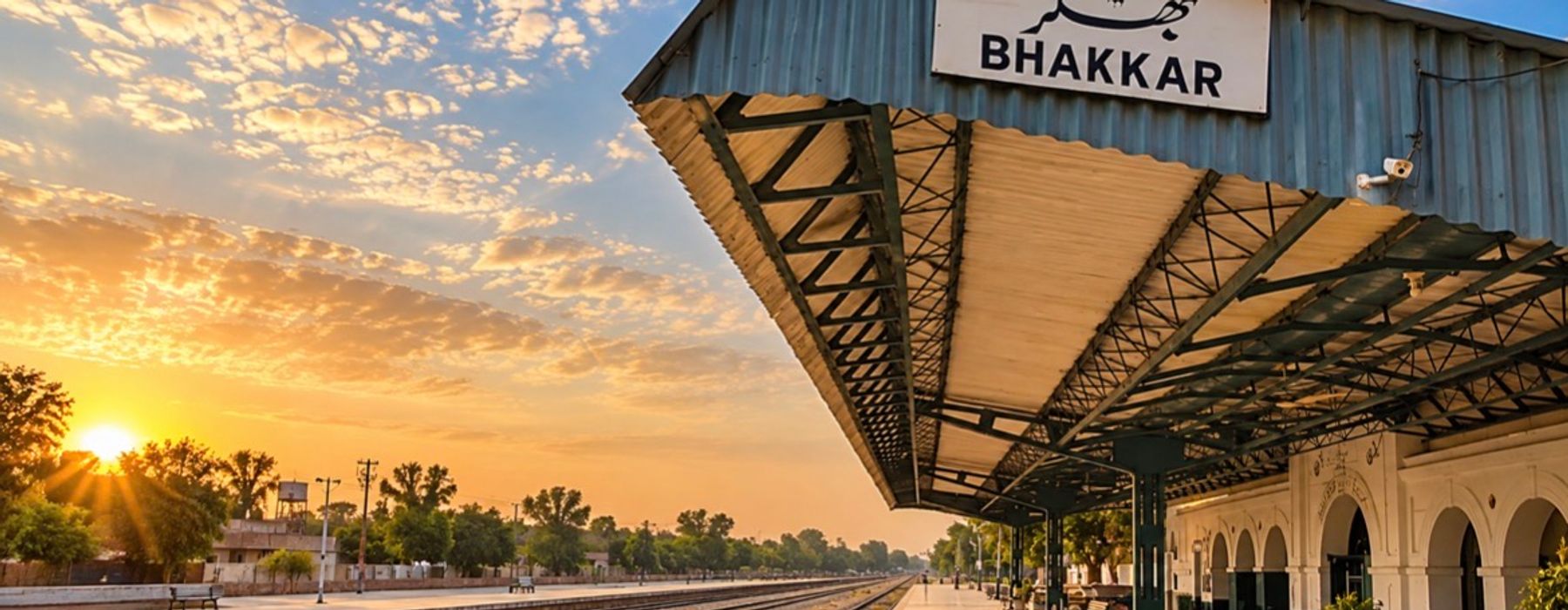
Bhakkar
About this place
Bhakkar is a historic district of southern Punjab and an important part of the Saraiki cultural region. Situated along the western edge of the Thal Desert and beside the Indus River, Bhakkar is known for its desert landscapes, agriculture, historic settlements, Sufi traditions and distinctive Saraiki culture.
GEOGRAPHY & LOCATION
Bhakkar District covers approximately 8,153 square kilometres and consists of four tehsils: Bhakkar, Darya Khan, Kallur Kot and Mankera.
The Indus River forms the western side of the district, while the Thal Desert extends across much of its eastern and central landscape.
This creates a distinctive combination of riverine land, irrigated farmland, sandy plains, desert vegetation and cultivated areas.
BHAKKAR CITY
Bhakkar city is the district headquarters and its main commercial and administrative centre.
The city's historic areas include the old walled town and traditional neighbourhoods, while newer residential areas have expanded around the historic centre.
King Gate, historically known as King Gate, is one of the remaining landmarks associated with the old city. The city also contains traditional markets, commercial areas, educational institutions and government offices.
HISTORY & FOUNDATION
The Bhakkar region has a long history extending through several periods of South Asian history.
The official district history records ancient settlement and agricultural activity in the wider region, followed by successive periods of Muslim rule, including the Ghaznavid, Delhi Sultanate and Mughal periods.
The town of Bhakkar is traditionally associated with Bakhar Khan, who is regarded as its founder.
The old town was historically surrounded by defensive walls and gates. Remains of the older settlement and fortifications can still be found in parts of the city.
The present district developed through changing administrative arrangements during the Sikh and British periods.
SIKH & BRITISH PERIOD
After the decline of Mughal authority, the Sikh Empire occupied Bhakkar.
The British took control of the area in 1848.
During British administration, Bhakkar was a tehsil of Mianwali District. The town and surrounding villages developed as an agricultural and administrative area.
Following independence in 1947, Bhakkar became part of Pakistan and continued to develop within the administrative structure of Punjab.
DISTRICT STATUS
Bhakkar became a separate district in 1981.
The district now consists of Bhakkar, Darya Khan, Kallur Kot and Mankera tehsils.
Its location between the Indus River and the Thal Desert gives it a distinctive geographical and cultural identity.
THE INDUS RIVER
The Indus River flows along the western side of Bhakkar District.
The river supports agriculture and provides a major ecological zone containing riverine vegetation, farmland and wildlife habitats.
At the same time, monsoon flooding can affect areas near the river.
The relationship between the Indus and the surrounding desert landscape is one of Bhakkar's defining geographical characteristics.
THAL DESERT
The Thal Desert is central to Bhakkar's identity.
The desert extends across a large part of the district, with sandy plains, dunes, scrub vegetation and areas of irrigated cultivation.
The wider Thal Desert stretches across several districts of Punjab, including Bhakkar, Layyah, Mianwali, Khushab, Muzaffargarh and Jhang.
For generations, communities in the region have adapted their farming, livestock practices and settlement patterns to the desert environment.
SARAiki LANGUAGE & IDENTITY
Bhakkar is an important Saraiki-speaking district.
According to the 2023 Pakistan Census, approximately 1.55 million residents of Bhakkar District reported Saraiki as their mother tongue.
Saraiki is widely used in homes, markets, villages, poetry, folk music and everyday communication.
The language connects Bhakkar with the wider cultural region of southern Punjab and the Thal.
MANKERA
Mankera is one of Bhakkar's most historically significant towns.
It has been an important settlement in the history of the Thal region and is particularly known for Mankera Fort.
MANKERA FORT
Mankera Fort is located near Mankera on the Bhakkar Highway.
According to the district administration, the fort was constructed in two phases. The original brick fortification dates to the period of Baloch rule, while additional thick mud fortifications were constructed during the Pathan period.
Much of the main fort is now in ruins, although sections of the outer walls remain.
The site represents an important surviving reminder of the military and administrative history of the region.
DARYA KHAN
Darya Khan is one of Bhakkar District's four tehsils.
The town and surrounding area are connected with agriculture, irrigation and the riverine environment of the Indus.
Its location contributes to the agricultural diversity of the district.
KALLUR KOT
Kallur Kot is another important town and tehsil of Bhakkar.
The area lies within the transition between cultivated land and the sandy landscape of the Thal.
Agriculture, livestock and local commerce form important parts of the area's economy.
AGRICULTURE
Agriculture is one of the principal occupations of Bhakkar.
The district contains both irrigated farmland and rain-dependent agricultural land.
Wheat, gram, cotton, sugarcane and other crops are cultivated in different parts of the district.
The sandy areas of the Thal are more dependent on rainfall, while irrigation has expanded cultivation in selected areas.
LIVESTOCK
Livestock plays an important role in rural life.
Cattle, buffaloes, goats, sheep and other animals are raised by farming communities.
Livestock provides milk, meat and additional income and remains particularly important in areas where agricultural production is limited by sandy soil or water availability.
THAL CANAL
The Thal Canal has helped transform parts of the sandy landscape into cultivated agricultural land.
Irrigation has allowed farmers to expand crop production and establish more permanent agricultural settlements in areas that were previously heavily dependent on rainfall.
FORESTS & AFFORESTATION
Forest plantations are an important environmental feature of Bhakkar.
The Bhakkar Forest Division was established during the development of the Thal region, with afforestation intended to stabilize shifting sand dunes and provide timber and fuel resources.
Kikar and shisham are among the trees found in the district's plantations.
WILDLIFE
Bhakkar contains several different ecological habitats, including riverine areas, Thal desert, irrigated forest plantations and agricultural land.
The district supports birds such as grey partridge, black partridge, dove, myna, babbler, bulbul, Indian robin and woodpecker.
Migratory birds and waterfowl also visit parts of the district.
SUFI & RELIGIOUS HERITAGE
Sufi traditions form an important part of Bhakkar's cultural landscape.
Shrines and religious sites are found throughout the district and serve as places of worship, remembrance and community gatherings.
The shrine of Pir Muhammad Rajan at Muhammad Rajan is one of the religious sites associated with the district.
URS & COMMUNITY TRADITIONS
Annual religious gatherings and Urs traditions bring communities together for prayer, remembrance and cultural activities.
These traditions form part of the wider spiritual culture of the Saraiki region.
FOLK MUSIC
Saraiki folk music is an important part of Bhakkar's cultural heritage.
Traditional songs, kafis, dohras and other forms of folk expression are performed at weddings, family gatherings and cultural events.
The district shares musical traditions with neighbouring Layyah, Mianwali, Dera Ghazi Khan and Muzaffargarh.
POETRY & ORAL TRADITION
Poetry and oral storytelling have long been part of life in the Thal region.
Saraiki poetry frequently draws on themes of love, separation, spirituality, nature, desert life and rural society.
Local storytellers, poets and singers continue to preserve these traditions through performances and community gatherings.
TRADITIONAL DRESS
Traditional clothing in Bhakkar reflects the wider dress culture of southern Punjab.
Men commonly wear shalwar kameez, while traditional turbans and regional styles remain visible in rural communities.
Women wear colourful shalwar kameez, embroidered clothing and locally influenced textile designs.
HANDICRAFTS
Traditional crafts remain connected with rural communities.
Embroidery, woven textiles, decorative work and other handmade crafts form part of the cultural traditions of the Thal region.
DESERT FOOD CULTURE
Bhakkar's cuisine reflects both agricultural and pastoral life.
Traditional meals include wheat breads, rice, vegetables, pulses, meat and dairy products.
Locally produced milk, ghee and seasonal agricultural products are important components of rural food culture.
MARKETS & TRADE
Bhakkar city serves as the district's principal commercial centre.
Traditional markets and newer commercial areas provide agricultural supplies, livestock trading, clothing, food, household goods and other services.
The district's markets are closely connected with surrounding villages and farming communities.
INDUSTRY
Bhakkar's industrial sector is largely connected with agriculture.
The district profile records flour mills, agricultural-implement units and other small-scale industries.
Cotton ginning, rice processing and other agricultural industries have also historically been present in the district.
CLIMATE
Bhakkar has a hot and dry climate with desert characteristics.
The official district climate profile records an average annual temperature of approximately 24.6°C and average annual rainfall of around 213 millimetres.
Summers can be extremely hot, while winters are comparatively cool.
The limited rainfall makes irrigation and water management particularly important for agriculture.
EDUCATION
Education has expanded throughout the district through government schools, colleges and private educational institutions.
The four tehsils contain schools and colleges serving both urban and rural communities.
Higher education opportunities also connect students with universities and institutions in neighbouring districts.
HEALTHCARE
Healthcare services include the District Headquarters Hospital, tehsil headquarters hospitals, rural health centres, basic health units and other public and private facilities.
These institutions serve the district's urban and rural population.
TRANSPORT & CONNECTIVITY
Bhakkar is connected by road with several important cities of Punjab.
Its location between the Indus River and the Thal Desert gives it a strategic position within the transportation network of western and southern Punjab.
The Bhakkar Highway connects the district with neighbouring areas, while roads connect the four tehsil headquarters and surrounding villages.
URBAN LIFE
Modern Bhakkar combines historic neighbourhoods with expanding residential and commercial areas.
Mandi Town, King Gate and other market areas remain important parts of the city's commercial life.
Newer neighbourhoods and infrastructure continue to expand around the older city.
RURAL LIFE
Outside the urban centres, much of Bhakkar's population lives in villages connected with agriculture and livestock.
The rhythm of rural life remains closely tied to the agricultural seasons, rainfall, irrigation, livestock and local markets.
DESERT & RIVER: TWO LANDSCAPES
One of Bhakkar's most distinctive characteristics is the meeting of two very different environments.
To the west lies the Indus and its riverine landscape.
Across much of the eastern and central district lies the sandy Thal environment.
Together they create a landscape that ranges from fertile riverbanks to dry desert plains.
LIVING HERITAGE
Bhakkar's heritage is not limited to forts and historic sites.
Its living heritage can be found in the Saraiki language, folk music, poetry, desert traditions, agriculture, livestock, Sufi gatherings, traditional food and community life.
MODERN BHAKKAR
Today, Bhakkar remains an important agricultural and administrative district of southern Punjab.
The 2023 Census recorded a district population of approximately 1.97 million.
Agriculture and livestock remain central to the local economy, while education, healthcare, commerce and public services continue to develop.
BHAKKAR & SARAIKISTAN
Bhakkar occupies a distinctive place within the Saraiki cultural region.
Its history connects it with the older political history of the Indus and Thal regions.
Its geography brings together the Indus River and the Thal Desert.
Its culture is expressed through Saraiki language, folk music, poetry, Sufi traditions, agriculture and desert life.
From the historic walls of Bhakkar and Mankera Fort to the sandy landscapes of the Thal and the riverbanks of the Indus, Bhakkar represents a distinctive part of Saraikistan's living cultural heritage.