
Politics
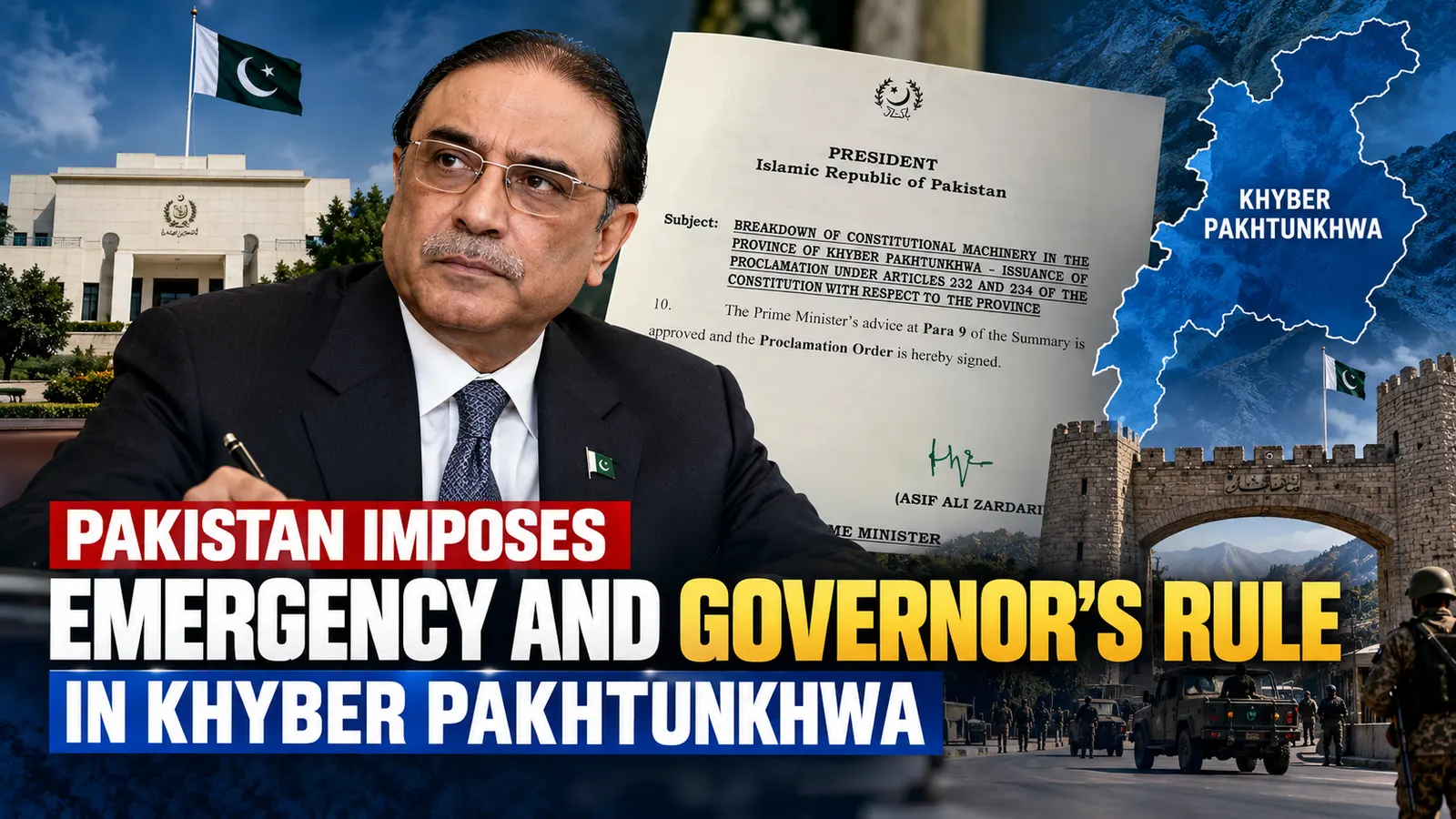
Pakistan Imposes Emergency and Governor’s Rule in Khyber Pakhtunkhwa
Pakistan Imposes Emergency and Governor’s Rule in Khyber Pakhtunkhwa
Islamabad, October 11, 2026 — President Asif Ali Zardari has approved a proclamation imposing emergency measures and governor’s rule in Khyber Pakhtunkhwa (KP), following advice from Prime Minister Shehbaz Sharif and a recommendation by the federal cabinet.
The decision invokes Articles 232 and 234 of the Constitution of Pakistan and marks a significant development in relations between the federal government and the Pakistan Tehreek-e-Insaf (PTI)-led province.
What has happened?
According to the government’s announcement, the president approved the prime minister’s advice on October 11, following a federal cabinet meeting that reviewed the security situation in KP.
Federal Law Minister Azam Nazeer Tarar subsequently announced that emergency measures and governor’s rule had been promulgated. He said the provincial government’s executive powers had been transferred to the governor, who would be assisted by an 11-member advisory council.
The government also announced that a separate secretariat would operate under the governor and chief secretary for 12 districts that would come directly under federal administration. The federal government further confirmed the deployment of Pakistan Army personnel to assist the civil administration in maintaining law and order.
These arrangements represent a major change in the province’s administration. Their implementation and the associated parliamentary proceedings will be important developments to watch.
Why has the federal government taken this step?
The federal government has cited a deteriorating law-and-order situation, increased militant activity and what it describes as inadequate cooperation by the KP government in counterterrorism efforts.
At a press conference, government ministers alleged that the provincial administration had failed to respond effectively to security threats. The federal government has presented the intervention as a constitutional measure intended to address the situation.
These allegations reflect the federal government’s stated position. Their legal and factual basis remains a matter for scrutiny, and the intervention has generated strong political opposition.
What do Articles 232 and 234 mean?
Article 232 provides for a proclamation of emergency in specified circumstances, including a grave threat to Pakistan’s security caused by internal disturbance beyond the power of a provincial government to control.
Article 234 addresses a situation in which the government of a province cannot be carried on in accordance with the Constitution. It provides for the assumption or transfer of specified provincial executive functions and includes requirements for parliamentary approval.
The two provisions have different constitutional purposes and requirements. Their invocation does not remove the need to comply with the Constitution, including the applicable procedures for parliamentary scrutiny and approval.
The precise legal basis for applying these provisions in KP is therefore an important part of the developing story.
What is PTI’s response?
PTI Chairman Gohar Ali Khan has strongly rejected the decision, describing it as undemocratic and a threat to the people’s mandate and provincial autonomy.
The party argues that security challenges should be addressed through cooperation, political dialogue and constitutional processes rather than measures that weaken an elected provincial administration.
PTI has also indicated that it intends to challenge the decision through constitutional, legal and democratic forums.
The federal government and PTI therefore remain sharply divided over both the security situation and the legitimacy of the intervention.
What happens next?
The next important developments include parliamentary consideration of the proclamations, the implementation of the new administrative arrangements, and any legal challenges brought against the decision.
The constitutional framework places specific limits and approval requirements on emergency measures and governor’s rule. Article 234, in particular, provides that a proclamation cannot remain in force for more than six months.
The practical effects on provincial administration, public services, security policy and relations between Islamabad and Peshawar will become clearer as the situation develops.
Why this matters
Khyber Pakhtunkhwa has faced serious security challenges while also experiencing tensions between its provincial leadership and the federal government. The latest intervention raises significant questions about security, democratic representation, provincial autonomy and the constitutional balance of power.
For residents of KP, the immediate concerns will include public safety, continuity of government services and the impact of the new arrangements on everyday life.
Saraikistan will continue to follow verified developments, including official notifications, parliamentary proceedings, responses from provincial leaders and any relevant court decisions.
Sources:
- Radio Pakistan — President promulgates emergency and governor’s rule in KP
- Dawn — Emergency and governor’s rule imposed in KP
- The Express Tribune — Emergency and governor’s rule imposed in KP
- The News International — Constitutional explainer on emergency and governor’s rule
Sources
Radio Pakistan — President promulgates emergency and governor’s rule in KP * Dawn — Emergency and governor’s rule imposed in KP